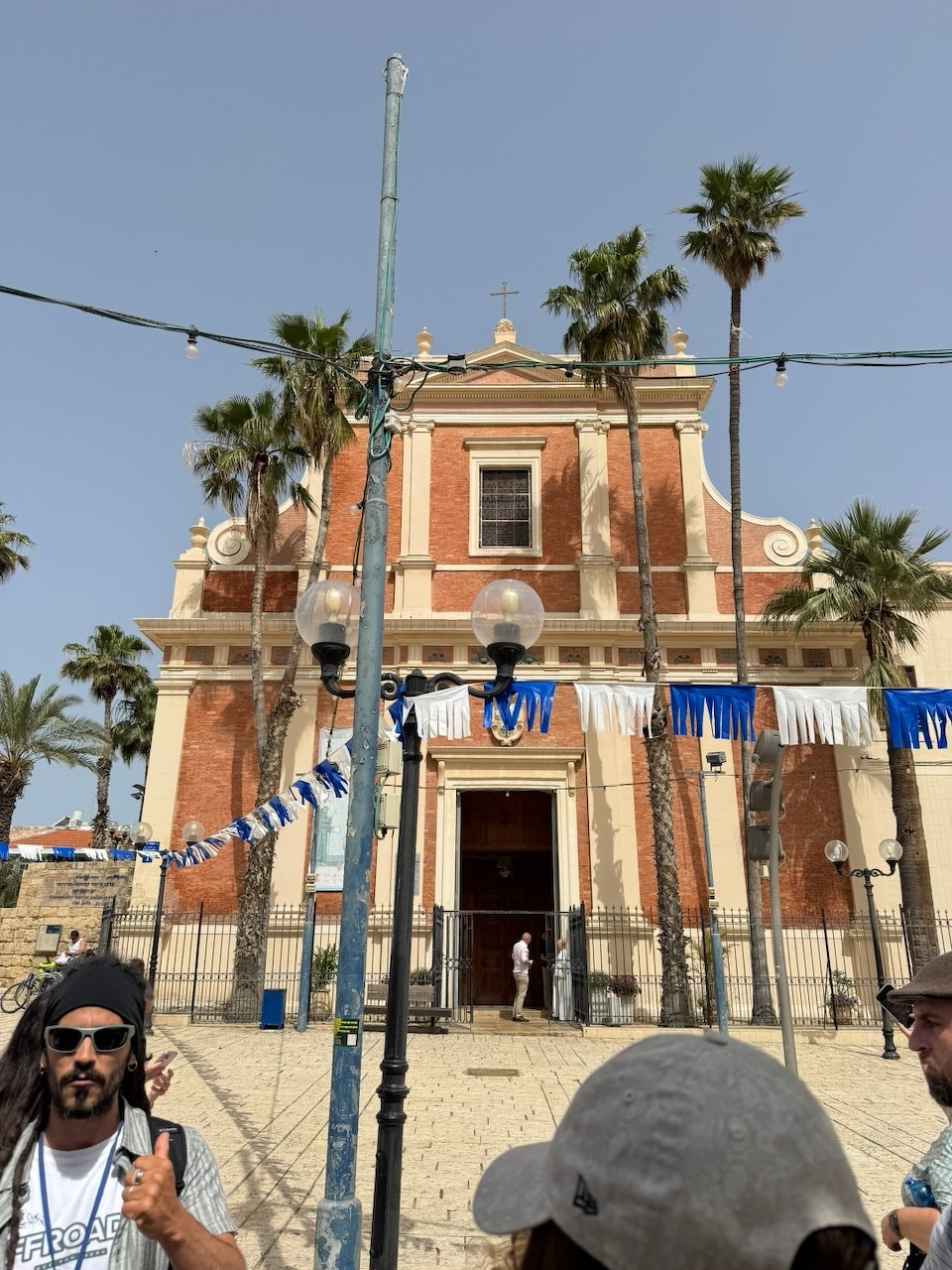
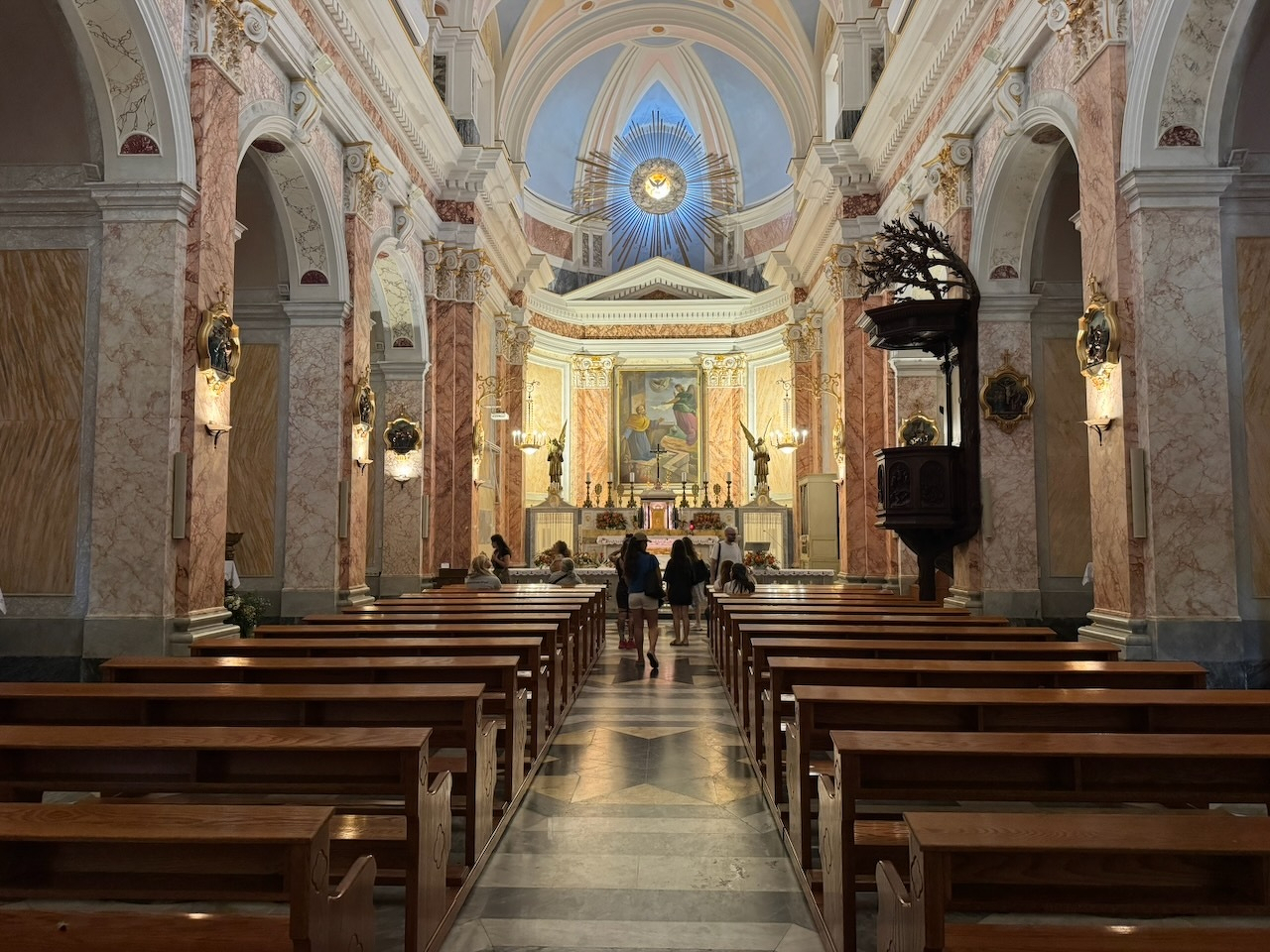
Church of St. Peter in Jaffa
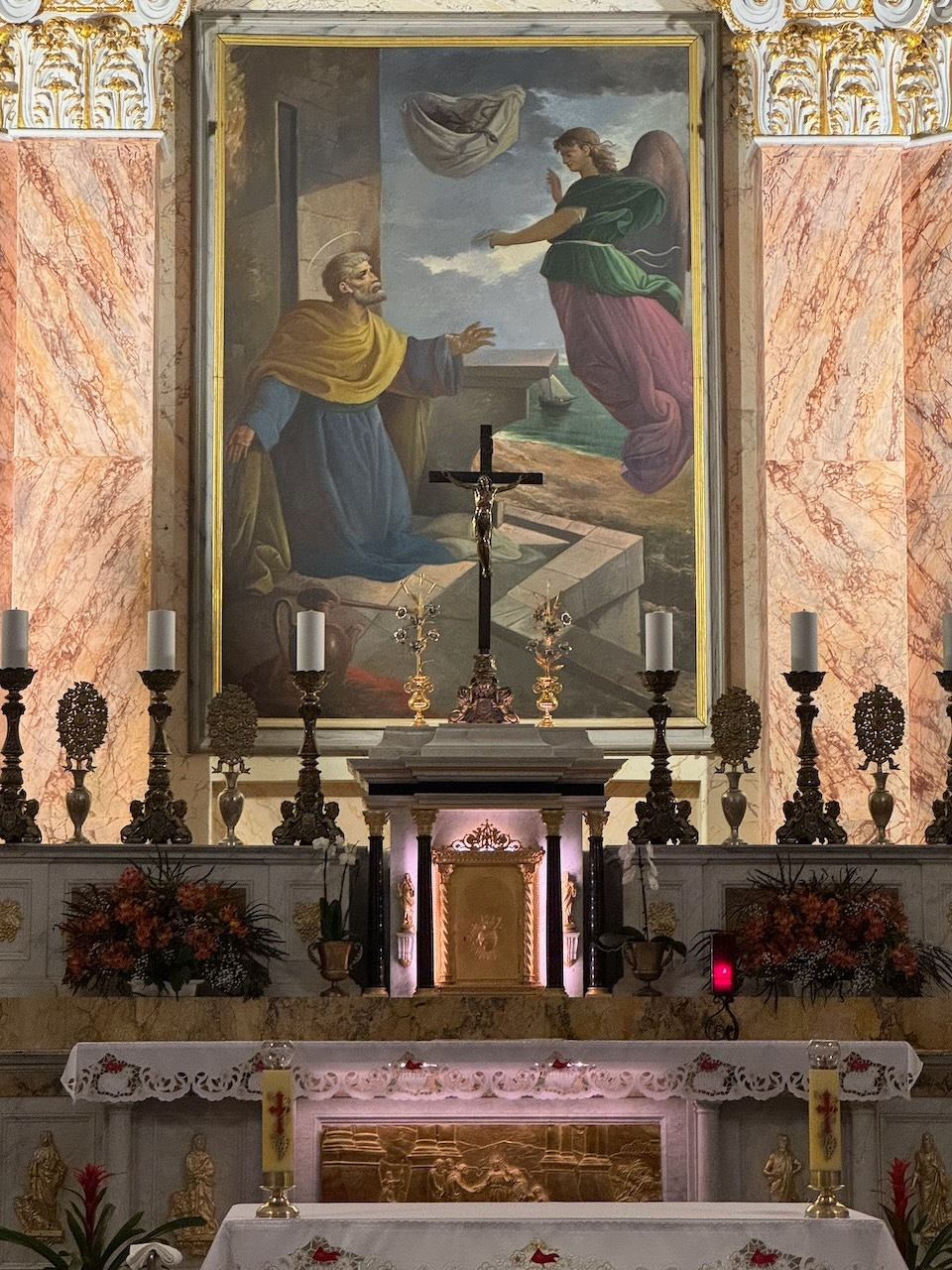
The ancient port of Jaffa, which has continuously operated as a port for over 4,000 years, is home to many Israeli Arabs. Most of the buildings we see in Jaffa now were actually built by the Ottoman Turks, and are only about 500 years old. Beside the many mosques and other semi-ancient stone buildings, Jaffa is also home to a large Franciscan Catholic church, The Church of Saint Peter.
I love Jaffa. It’s tangled and quirky. There’s a famous Jaffa flea market where all kinds of crazy junk is sold. It’s a great place to look for parts to repair other things like watches, or to just find curiosities. The waterfront has a bunch of cafes and the sea is beautiful from the high vantage point. You also get great views toward Tel Aviv, to the north. Technically, Tel Aviv - Jaffa (Yafo) is a single municipality now, but Old Jaffa still retains its ancient character. Jaffa is the place to go when you want outstanding hummus (pronounced hoo-moos). And yes, there is a difference.
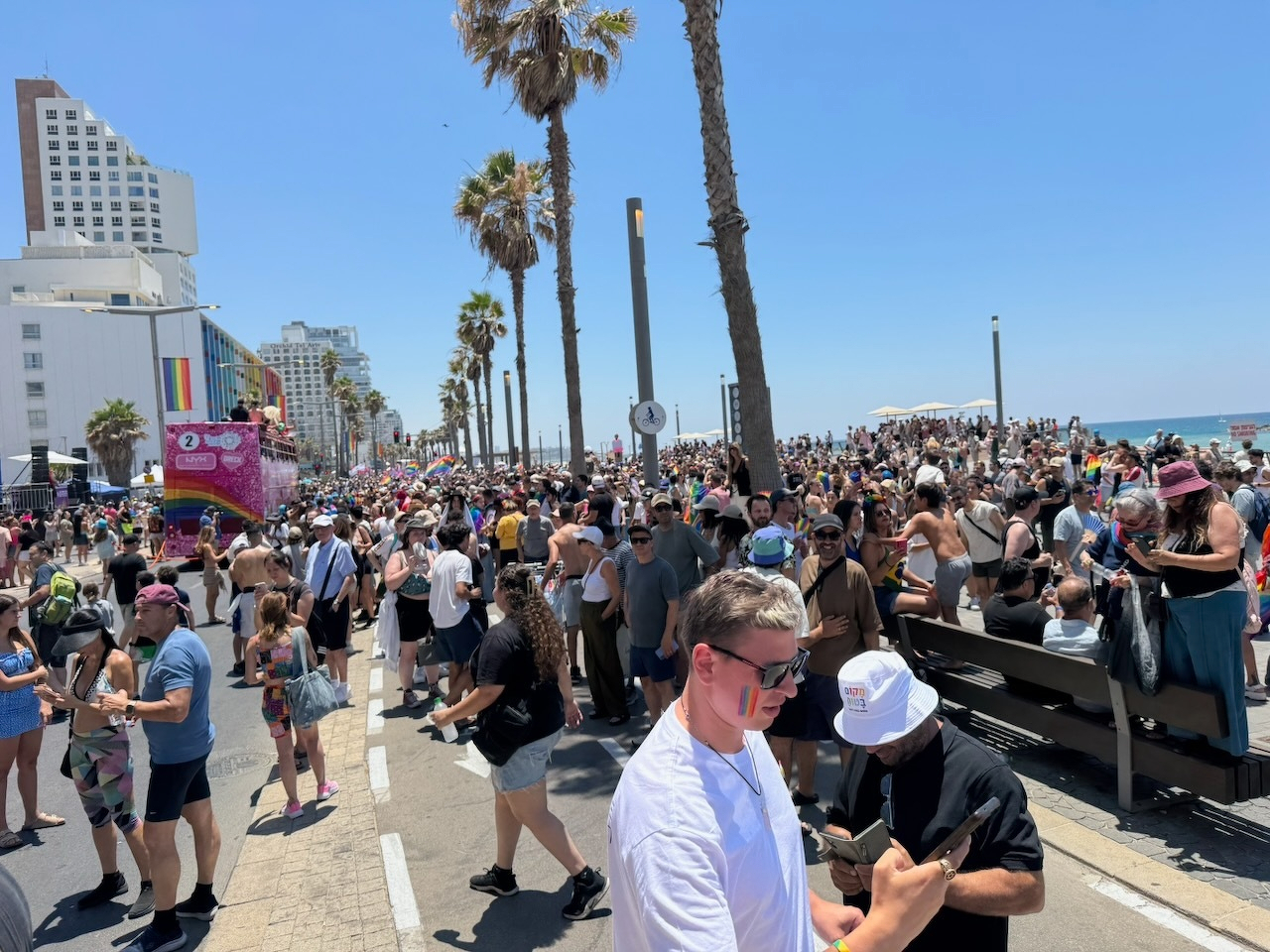
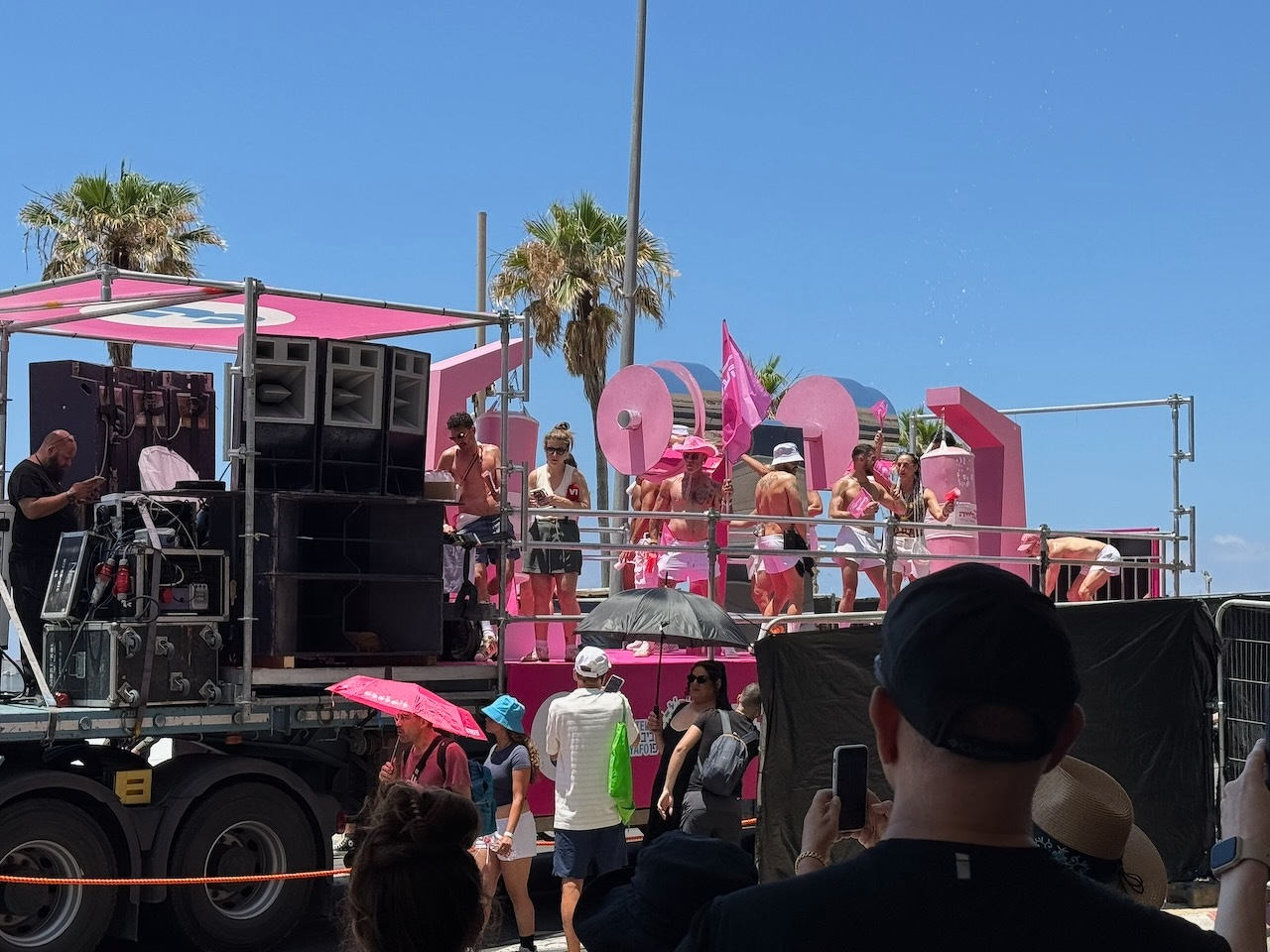
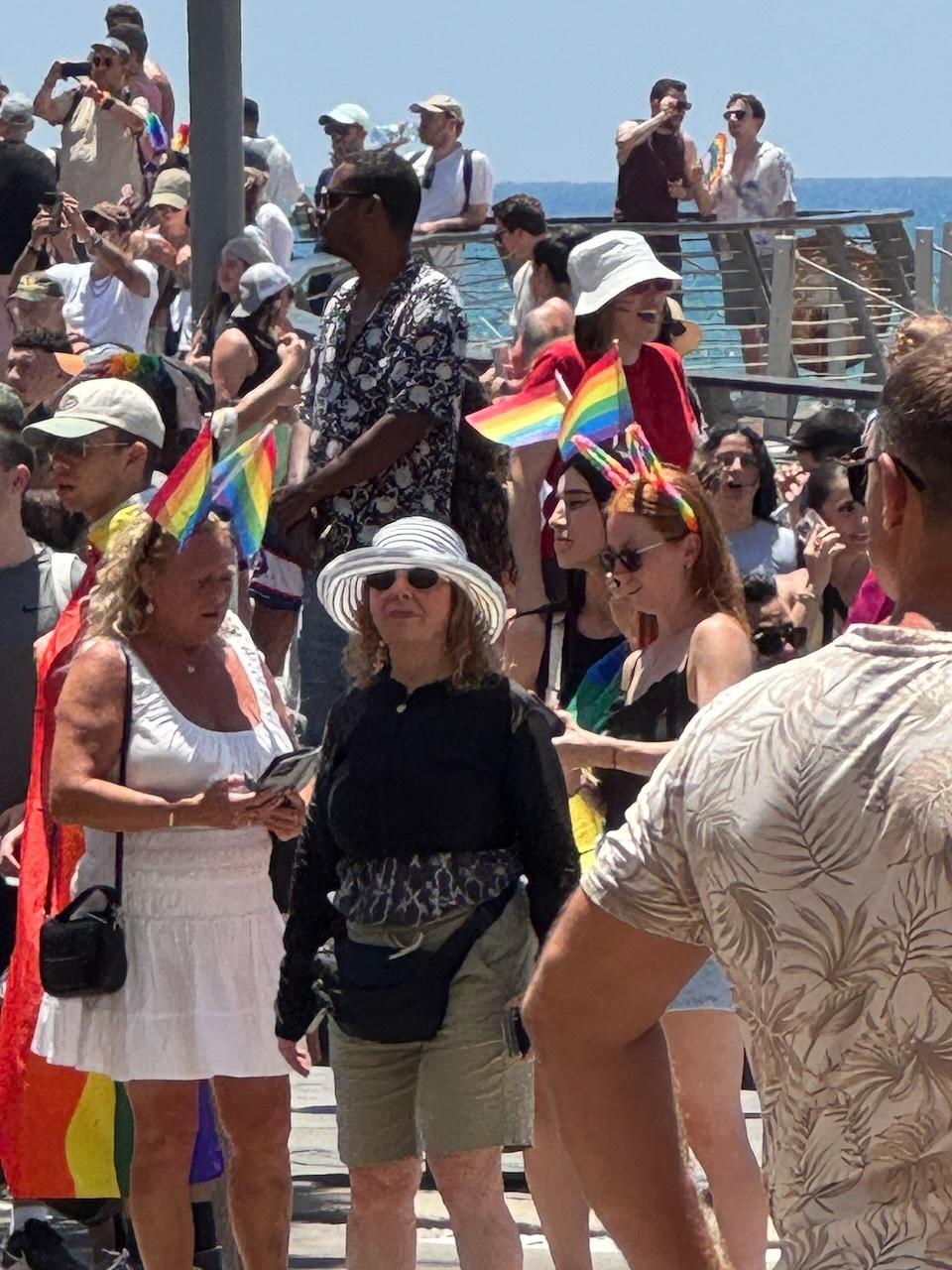
Pride Day in Tel Aviv
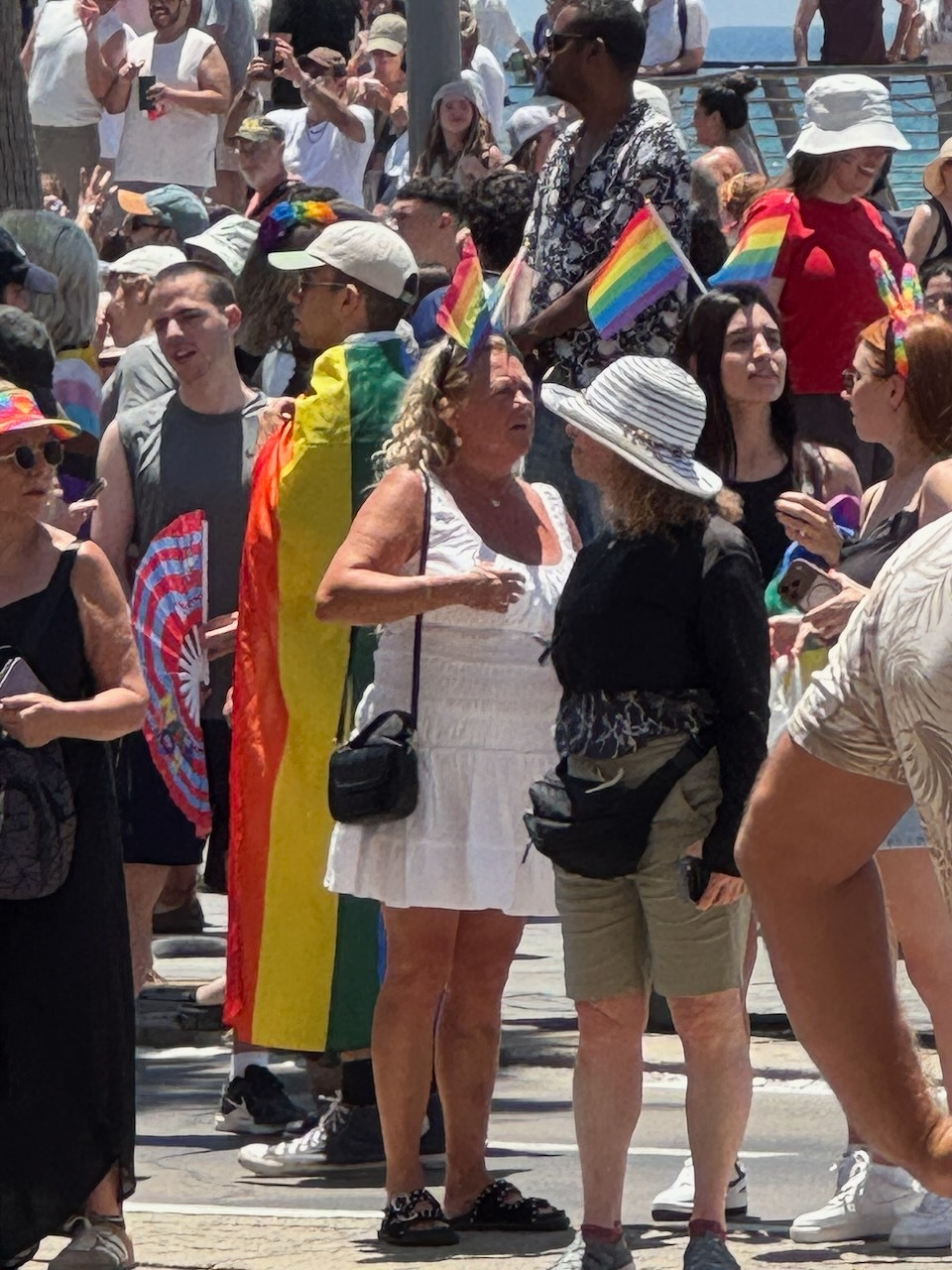
Pride Day is a major annual event in Tel Aviv. It was estimated that 100,000 people attended the parade, which is 1% of the entire country of 10 million. We were lucky because the temperature was only about 80 degrees F that day. Soon we’ll see 90+ degrees with 70-80% humidity. The parade takes place on the street along the Tel Aviv waterfront, between the hotels to the east side and the Mediterranean beaches to the west. That;s Nancy in the white hat. I stood across the street in the shade.

Food Shopping and the Shuk (Market)
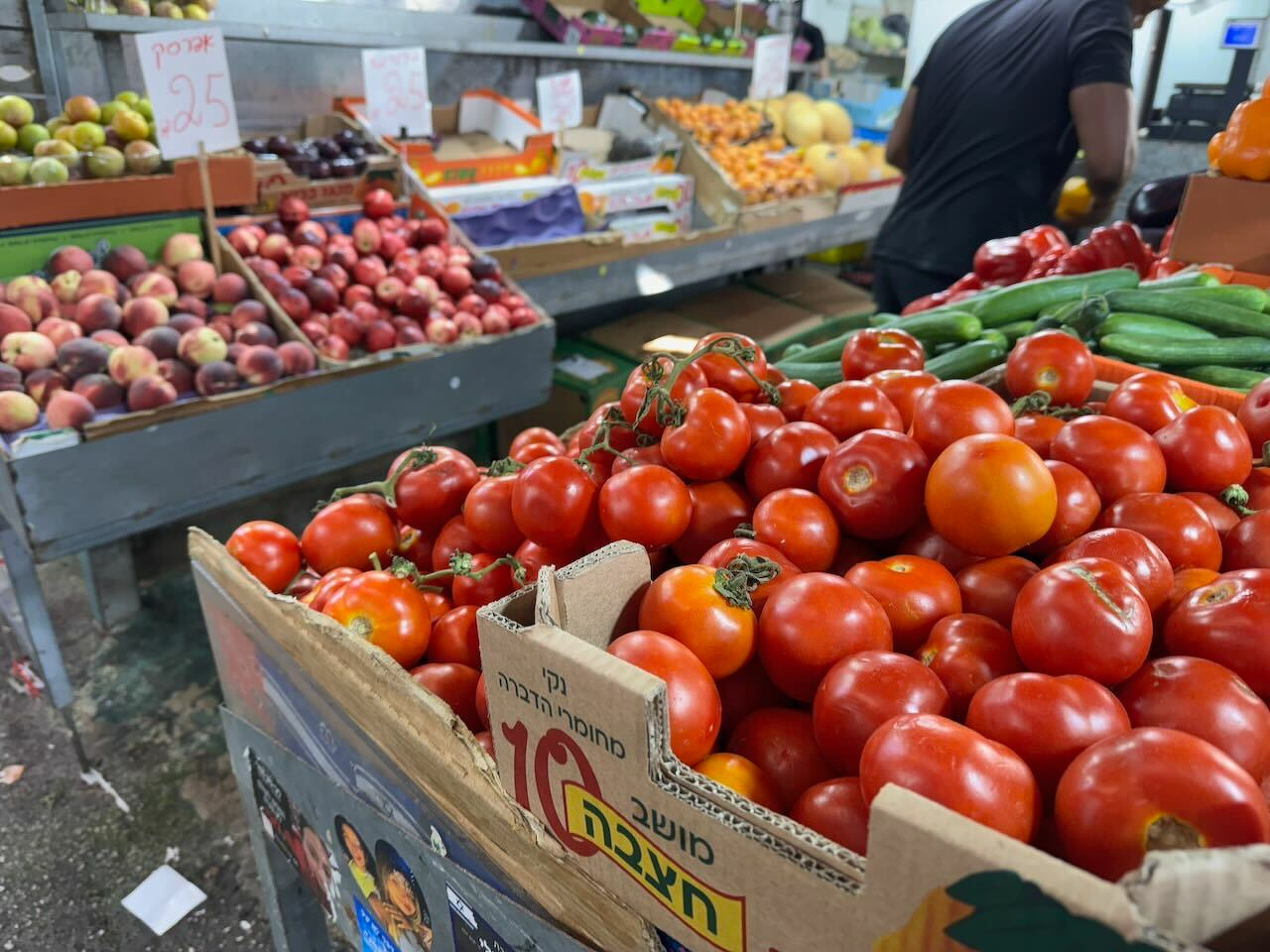
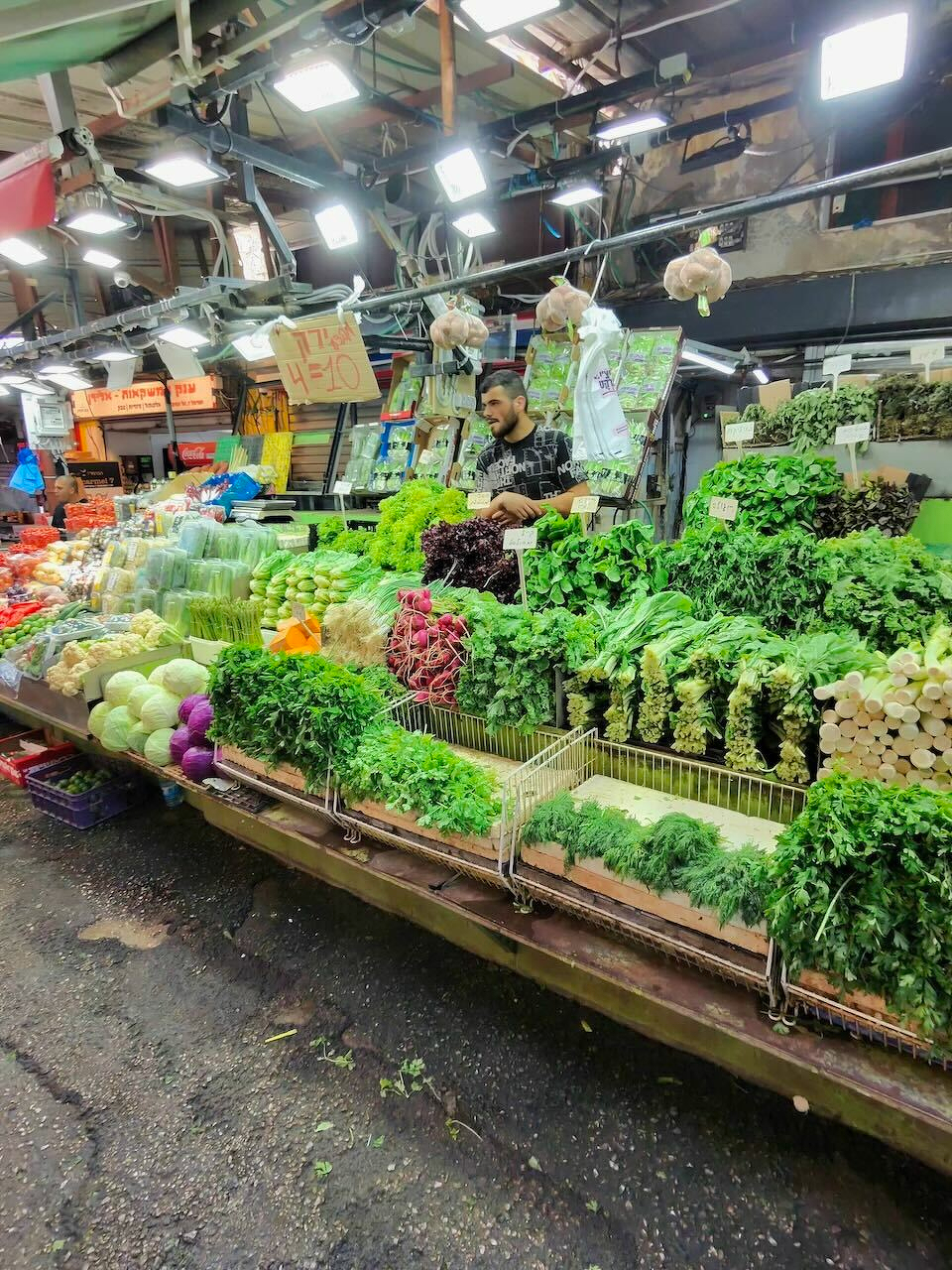
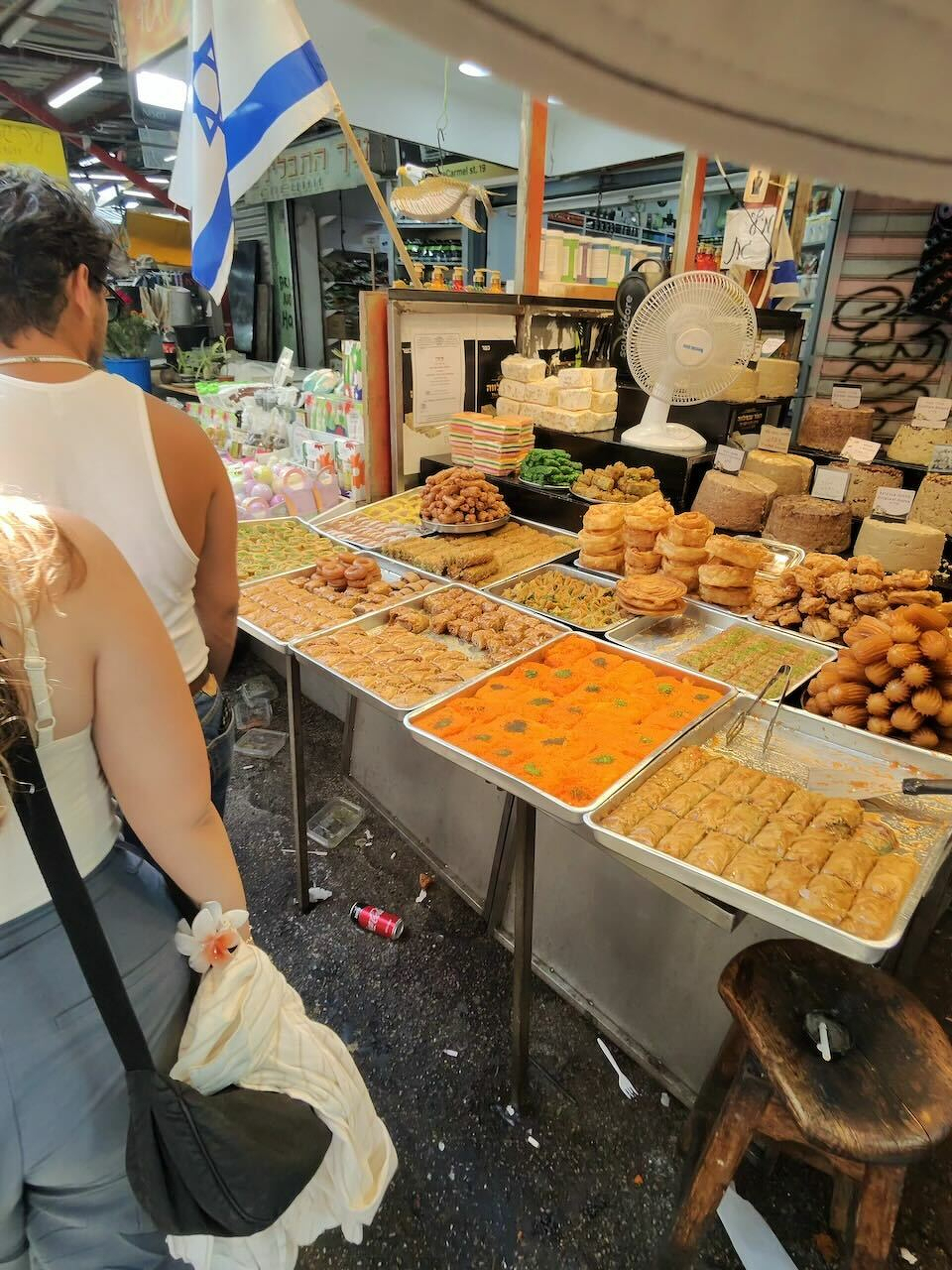
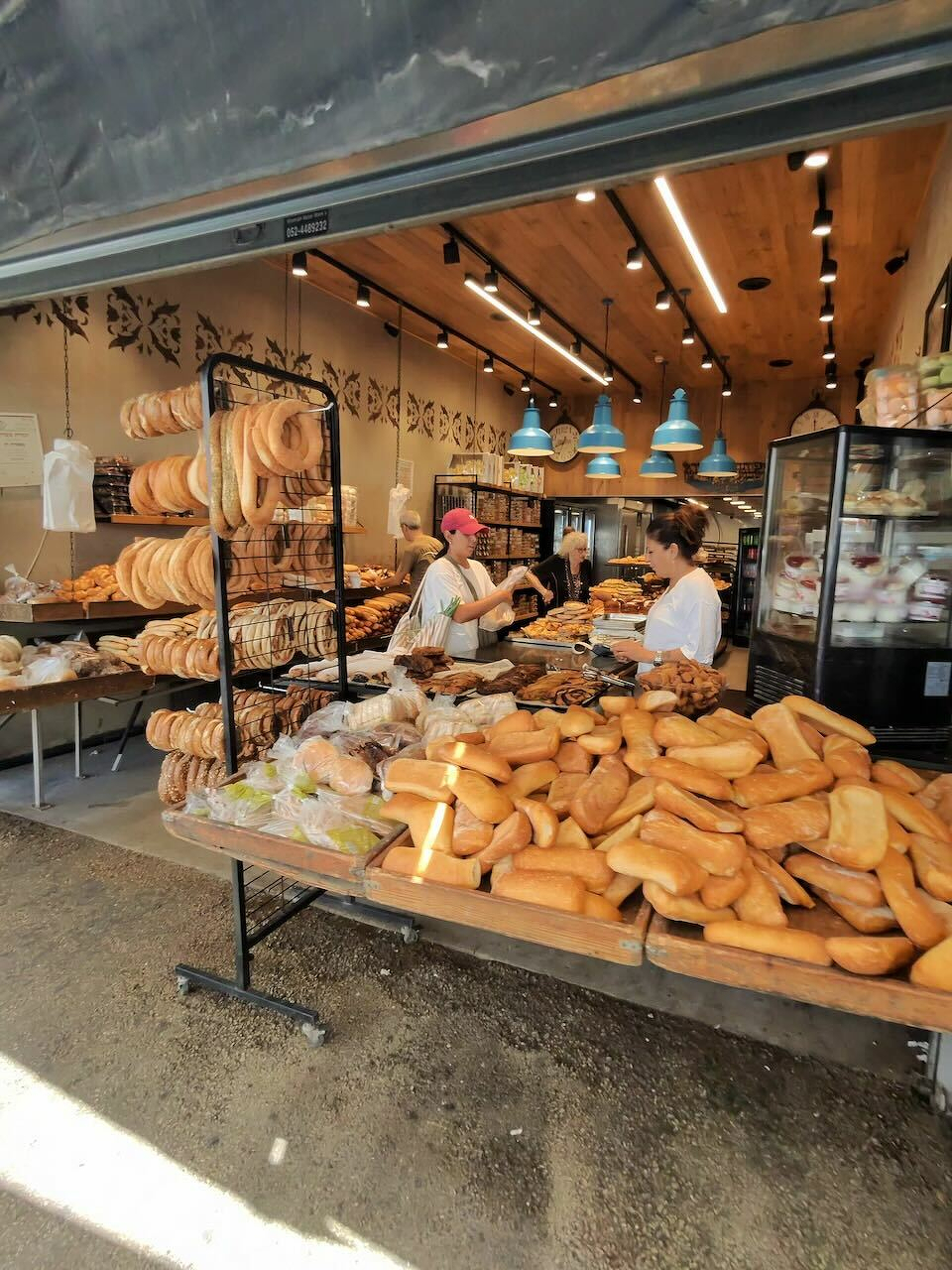
The food shopping experience in Israel is much different from how we buy our groceries in America. We have very few American-style supermarkets, and none near our apartment. Televivians buy food from smaller supermarkets, about the size of a Trader Joe’s, when they are close enough, and from dozens of small grocery stores all over the city. In fact, about 100 yards (or about 100 meters) from our apartment we have two small markets side by side. They’re everywhere, and they are typically double the size of a 7/11. But the real shopping experience in Israel is in the street markets, called shuks (shooks) in Hebrew or suks (sooks) in Arabic. The most well-known shuk in Tel Aviv is the Carmel Market (Shuk H’Karmel). When we first arrived in Israel, we stayed for two months in an AirBnB practically adjacent to the shuk, and we bought most of our fresh food there, and quite a few of our canned foods, as well. The shuks are lined with vendors selling everything from t-shirts to vegetables, olives of all kinds, spices, and kitchen ware.
Note: In the video posted here, for some reason everything I said was doubled. That’s some kind of bug in the Meta Ray-Ban software for my smart glasses.
War and Shelter
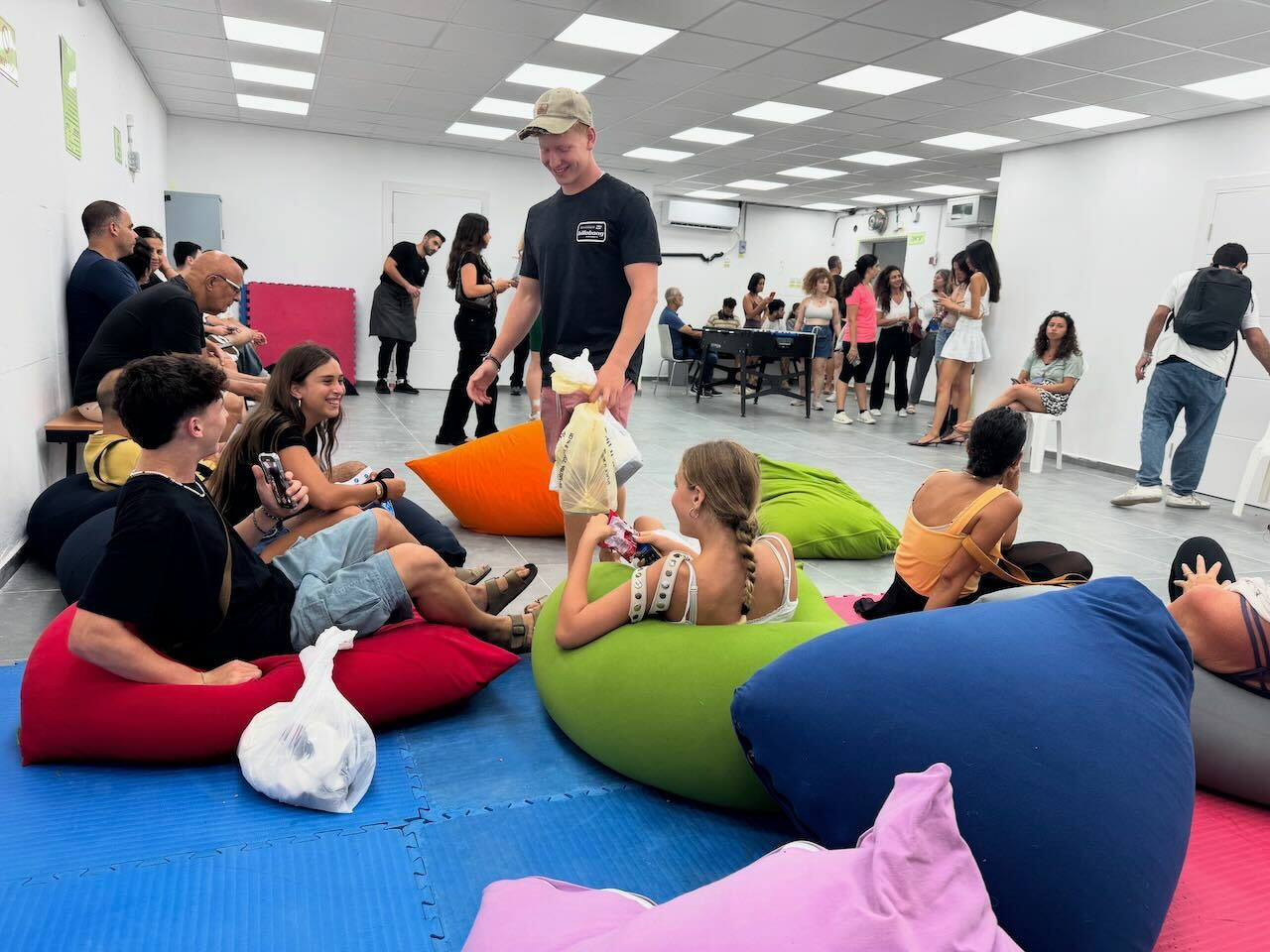
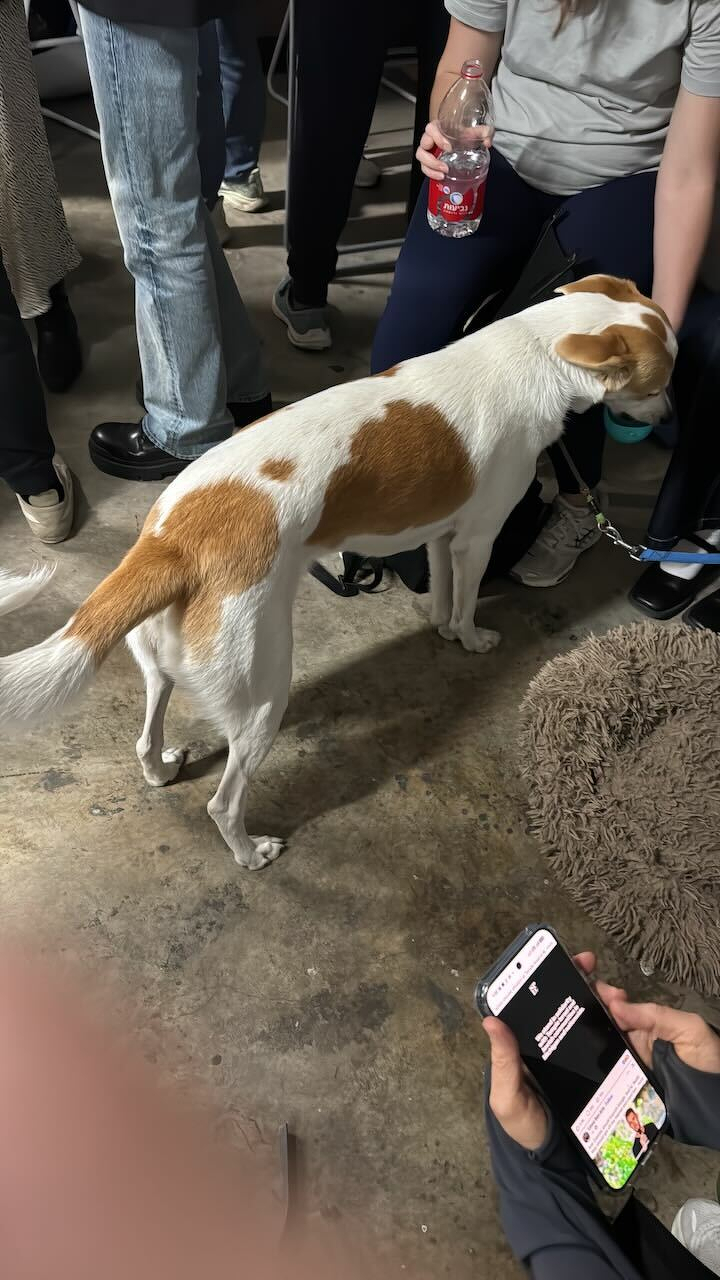
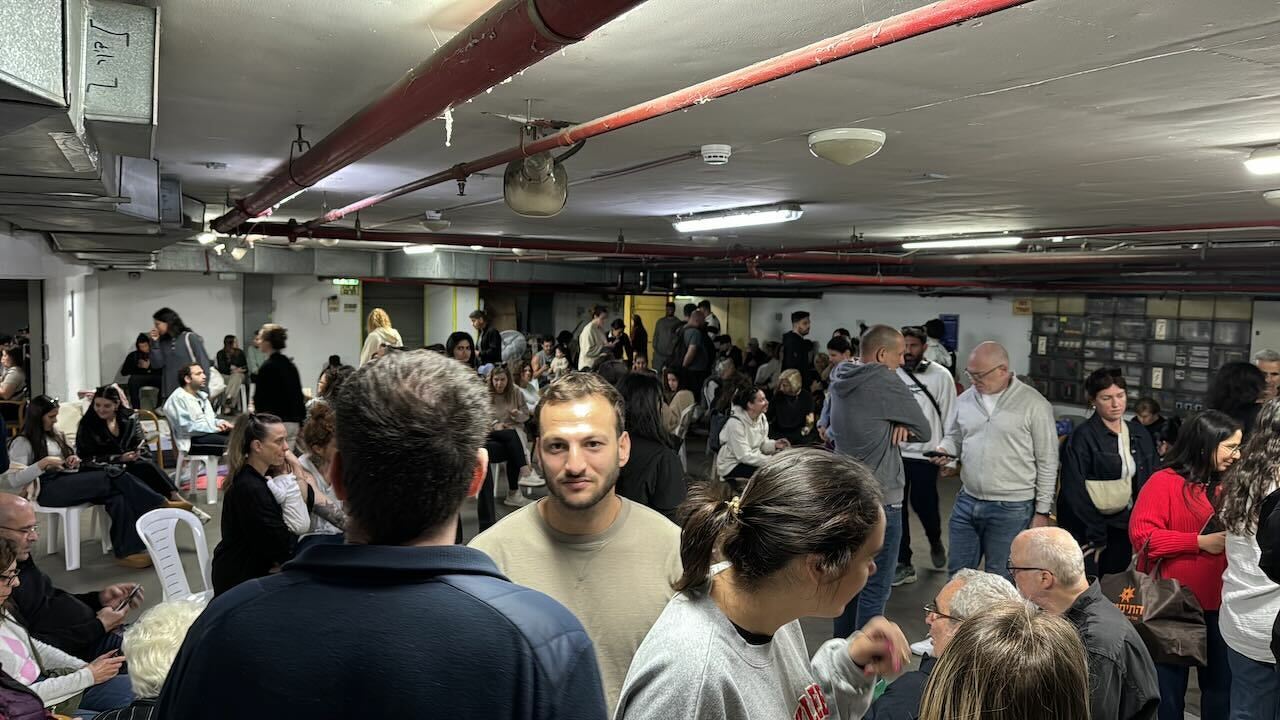
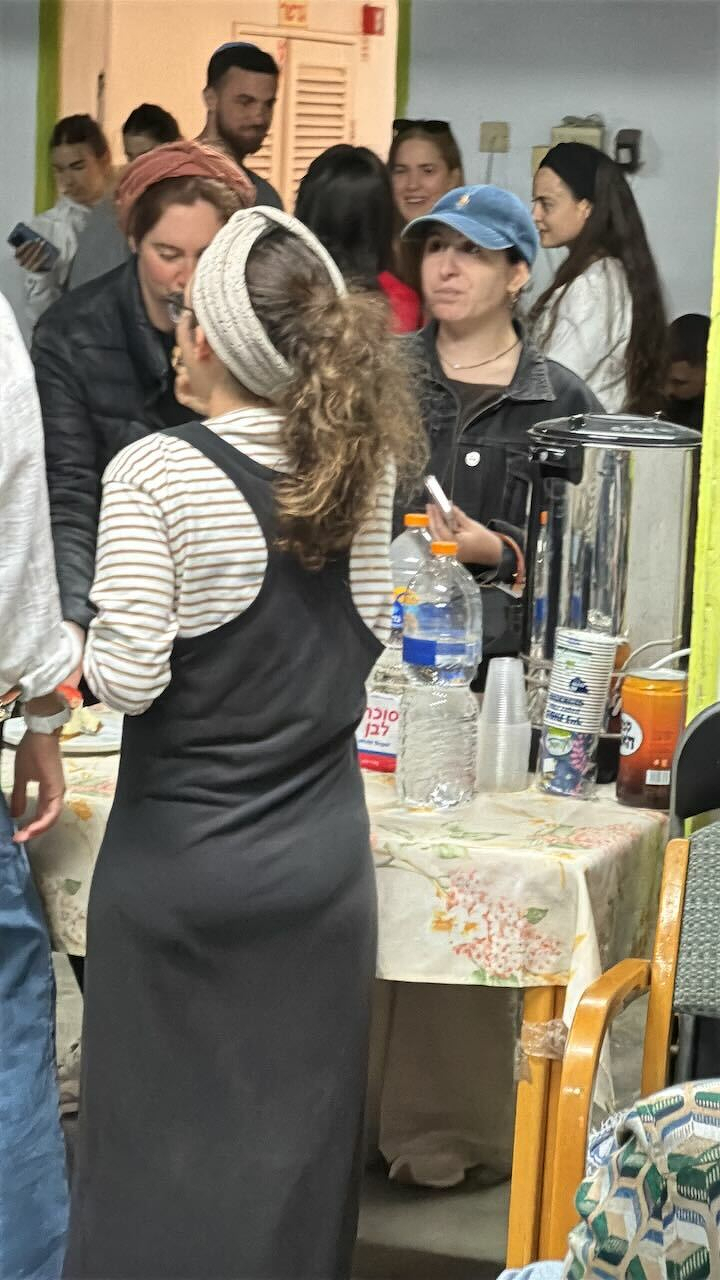
Israel has been at war on and off since before its founding in 1948. I won’t attempt to explain the roots of the Arab-Israeli conflict here. It’s a long, complicated story. But I can say that in the current war, Israelis have surprisingly positive attitudes. Nothing shows that more clearly than the faces of people in bomb shelters during air raid sirens. Since we arrived in the country, we’ve had two rounds of missile and rocket attacks. The first was from the Houthis in Yemen who claimed to be supporting Gaza. This time it’s the Iranians, along with Hezbollah in Lebanon and most recently, more Houthi attacks. We have a safe room in our apartment, but when we’re out and about, we join our fellow citizens in the public shelters.

A Beach City
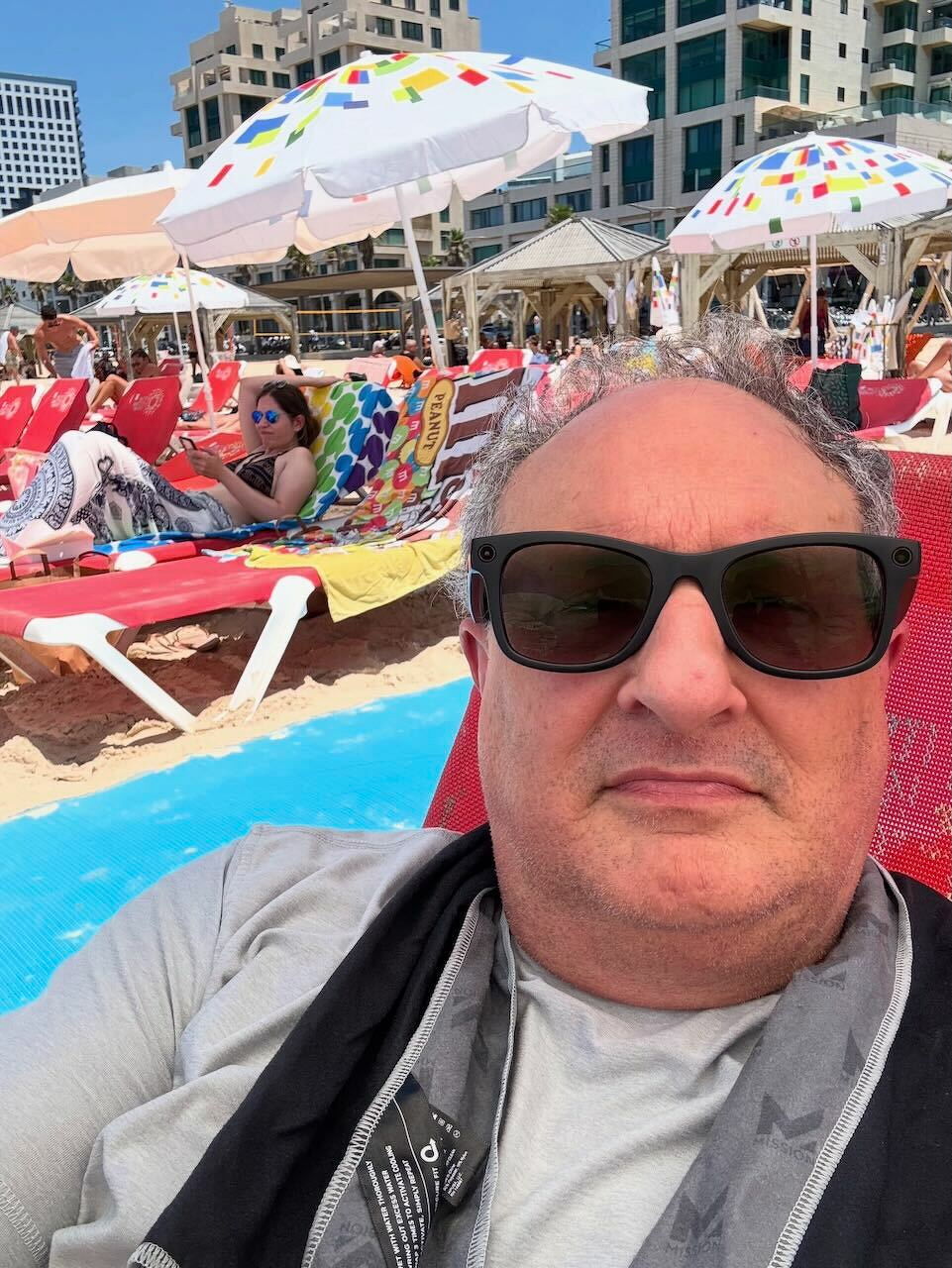
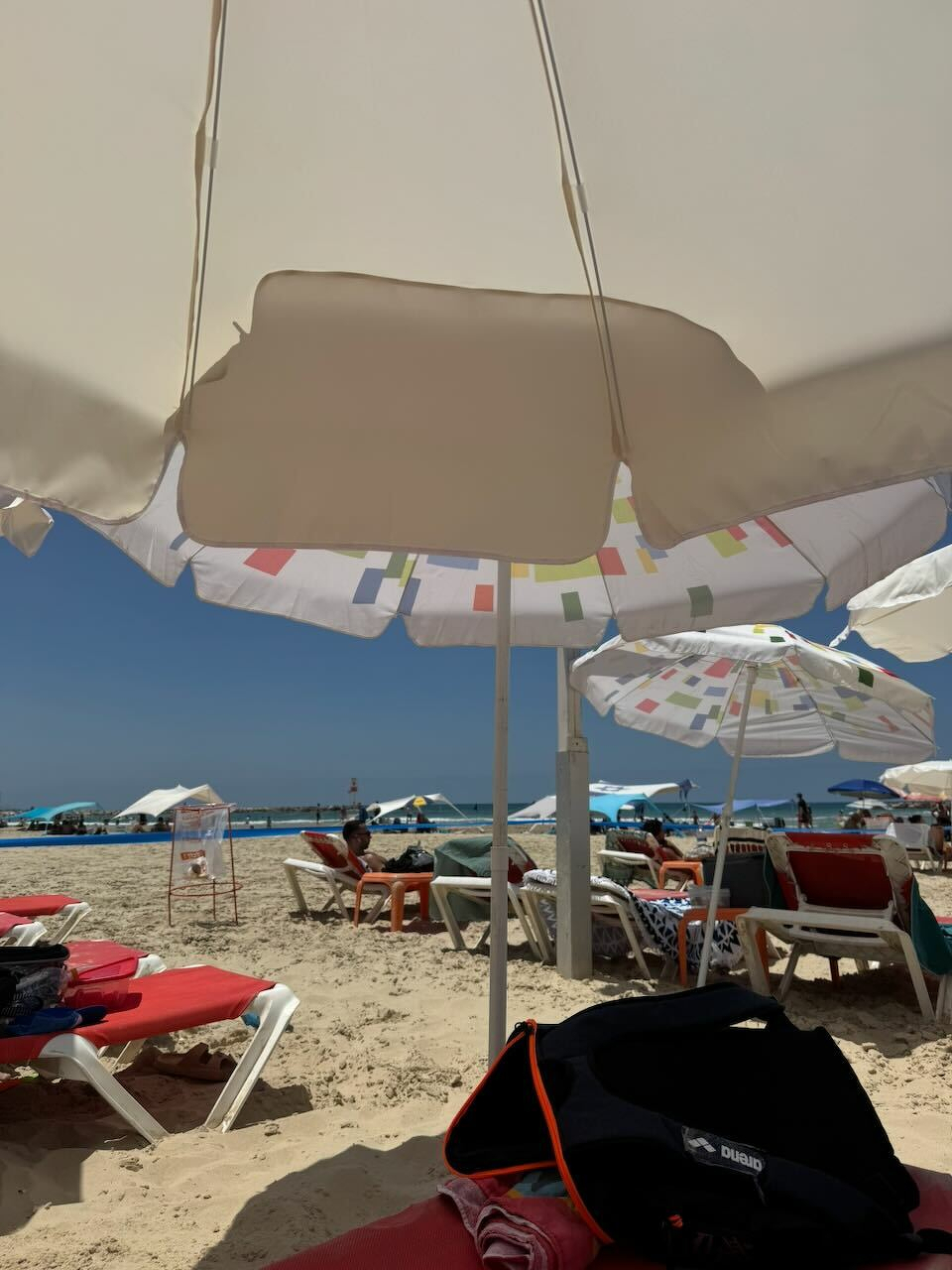
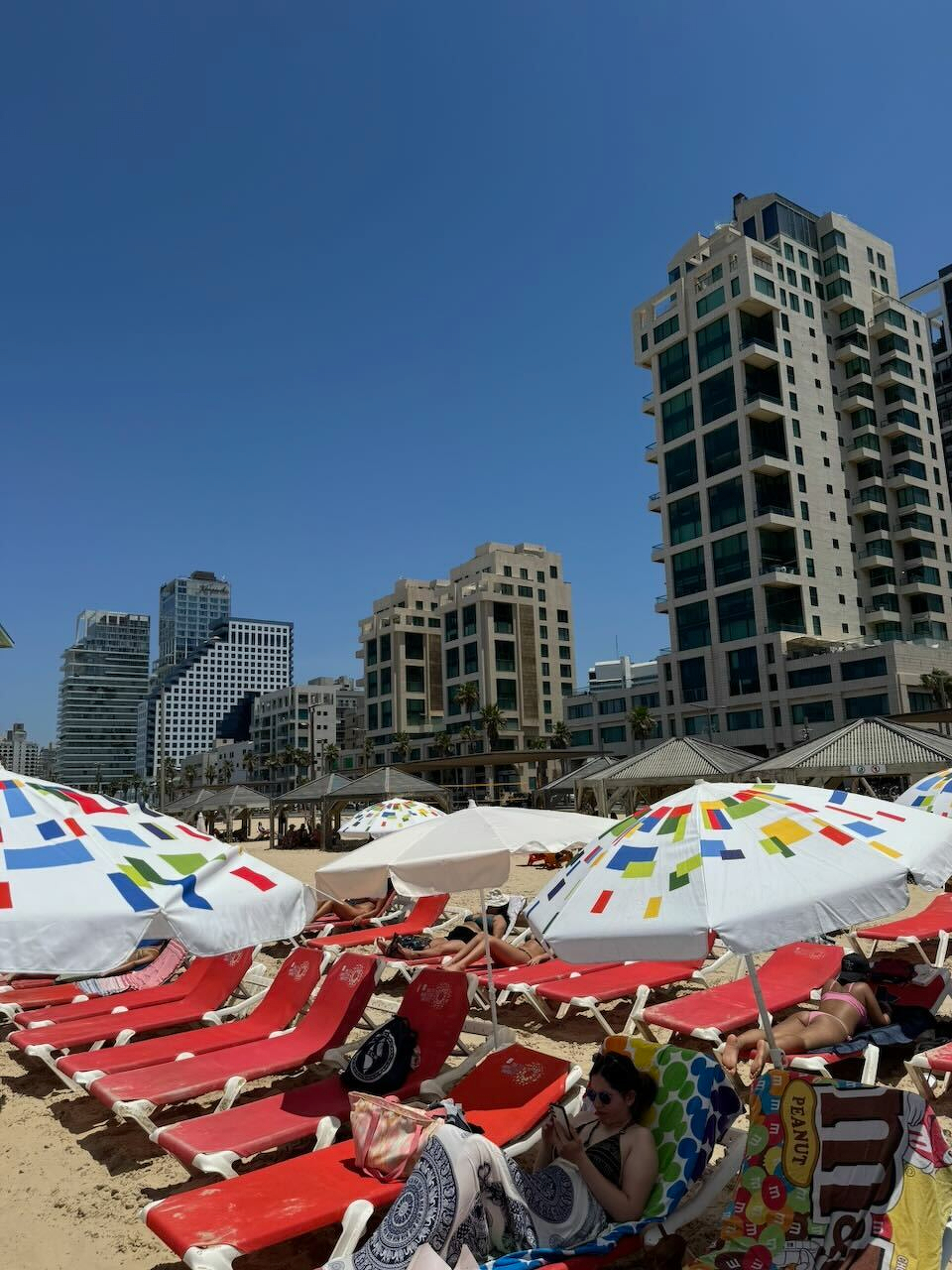
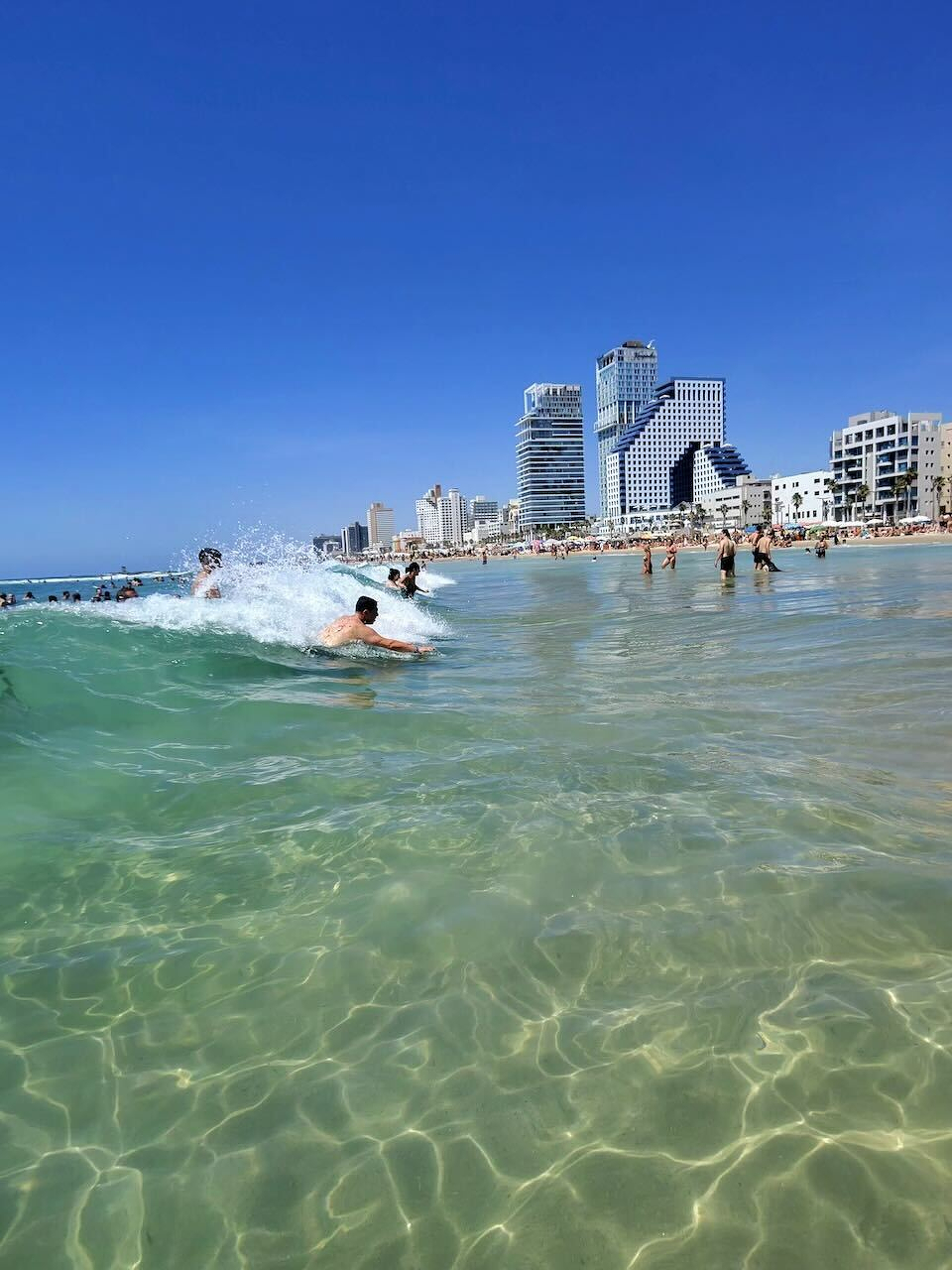
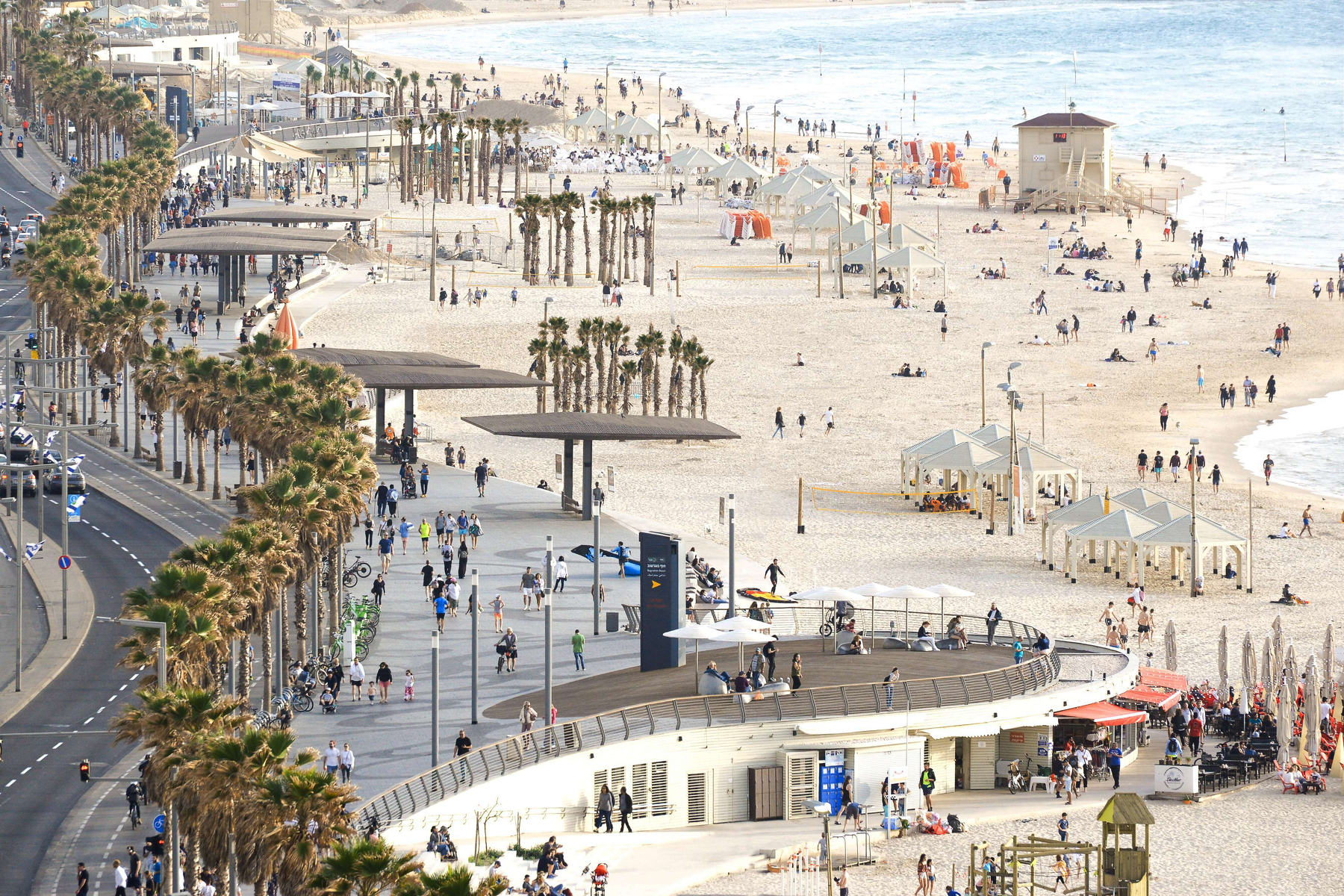
One of the things I love most about living in Tel Aviv is that it’s a beach city. That was originally part of my motivation for moving here. The disadvantage is that Tel Aviv has a high cost of living, among the most expensive cities in the world. Still, it has enough to offer that to us it’s worth the cost and consequential change in lifestyle.
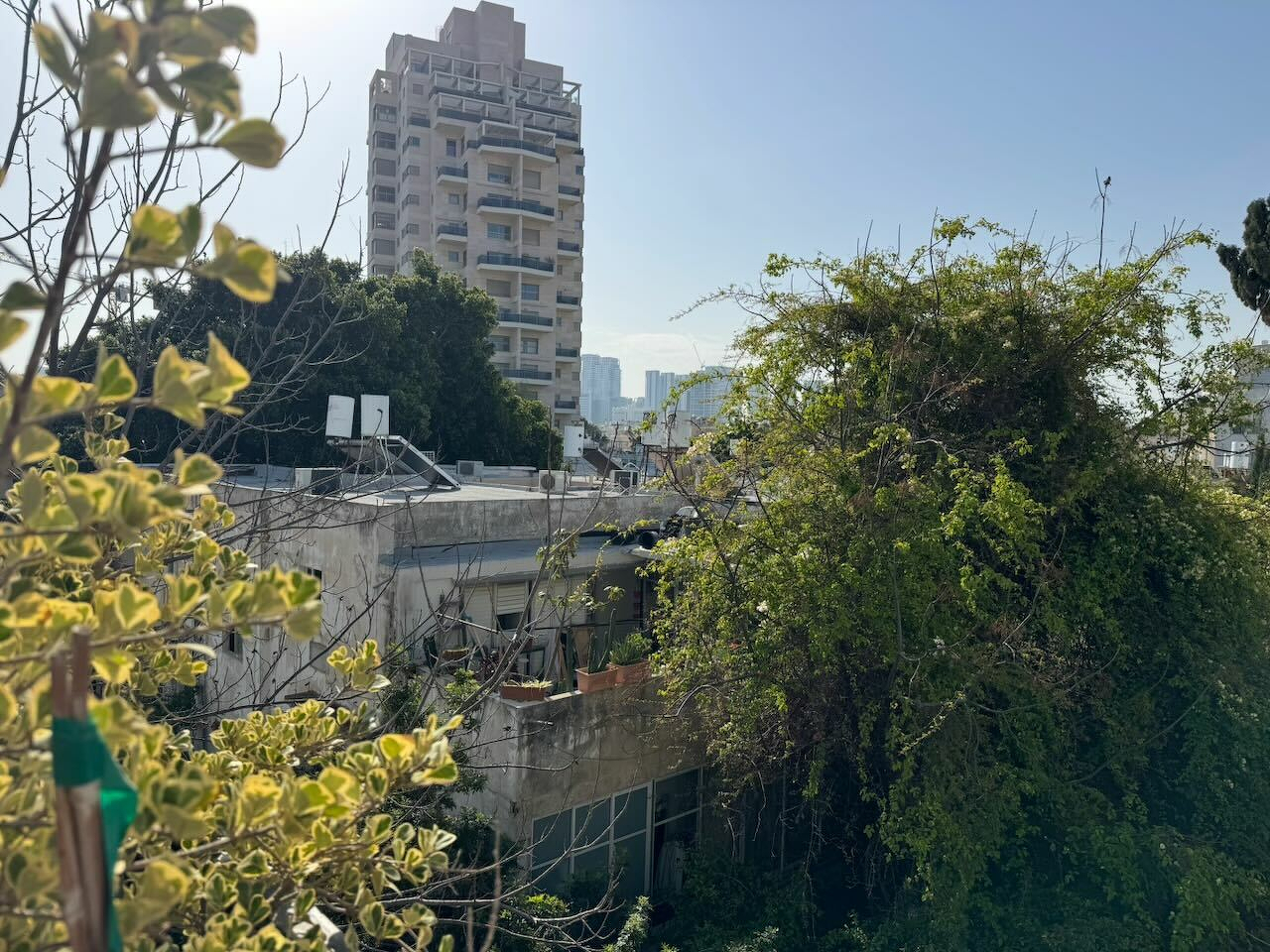
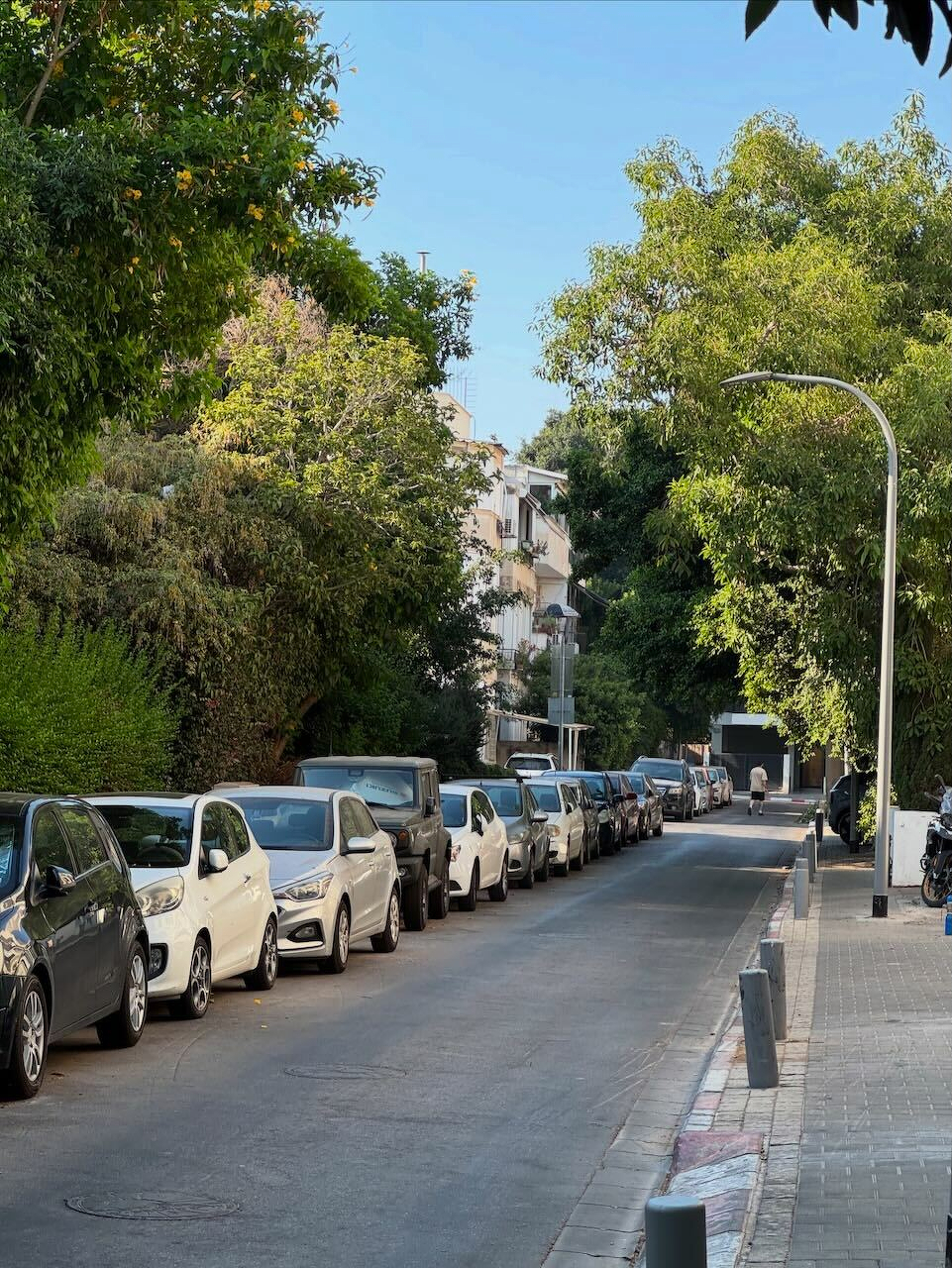
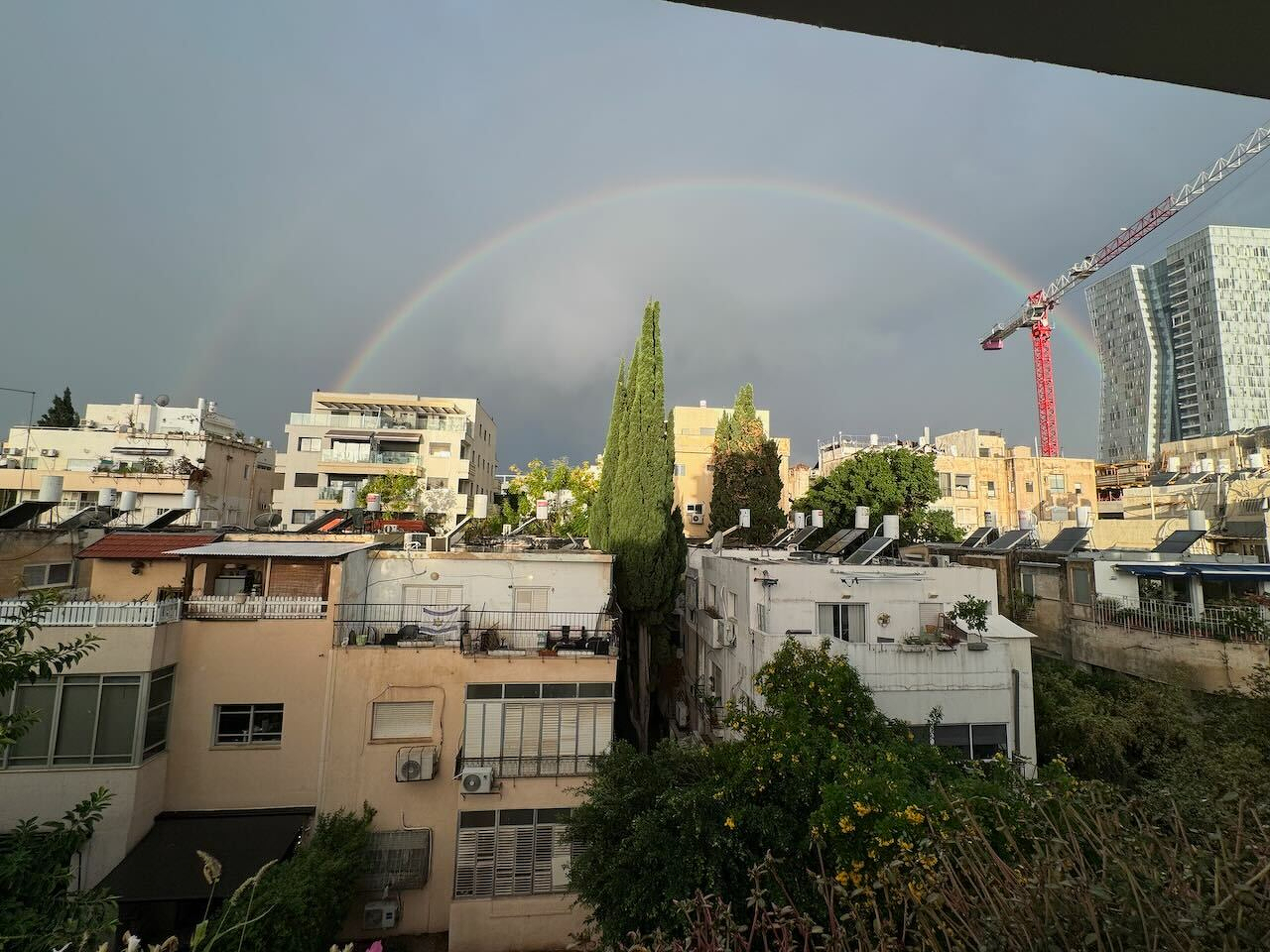
Our apartment is located on a tree-lined street less than 50 yards off a main thoroughfare. From our front and back balconies we see buildings of all types. This is typical of Tel Aviv, old and new. Israelis have not traditionally invested as much effort in maintaining building exteriors. You often find luxurious apartments inside of shabby looking buildings with peeling stuco and water stains from air-conditioning condensate. Our building, with its five apartments, is renovated and more appealing than some of the neighbors'.
We live in about 900 square feet, including the two small balconies. It’s small but adequate, and we’re in a part of the city that we love. We have a ten minute walk to the beach, and we can walk to almost anything, including supermarkets (nothing like American style Safeway or Kroger stores), green grocers, bakeries, cafes, bike shops, and a shopping mall. One of our three bedrooms is a reinforced shelter called a mamad. More on that in a future post.
A Modern Western-style Country
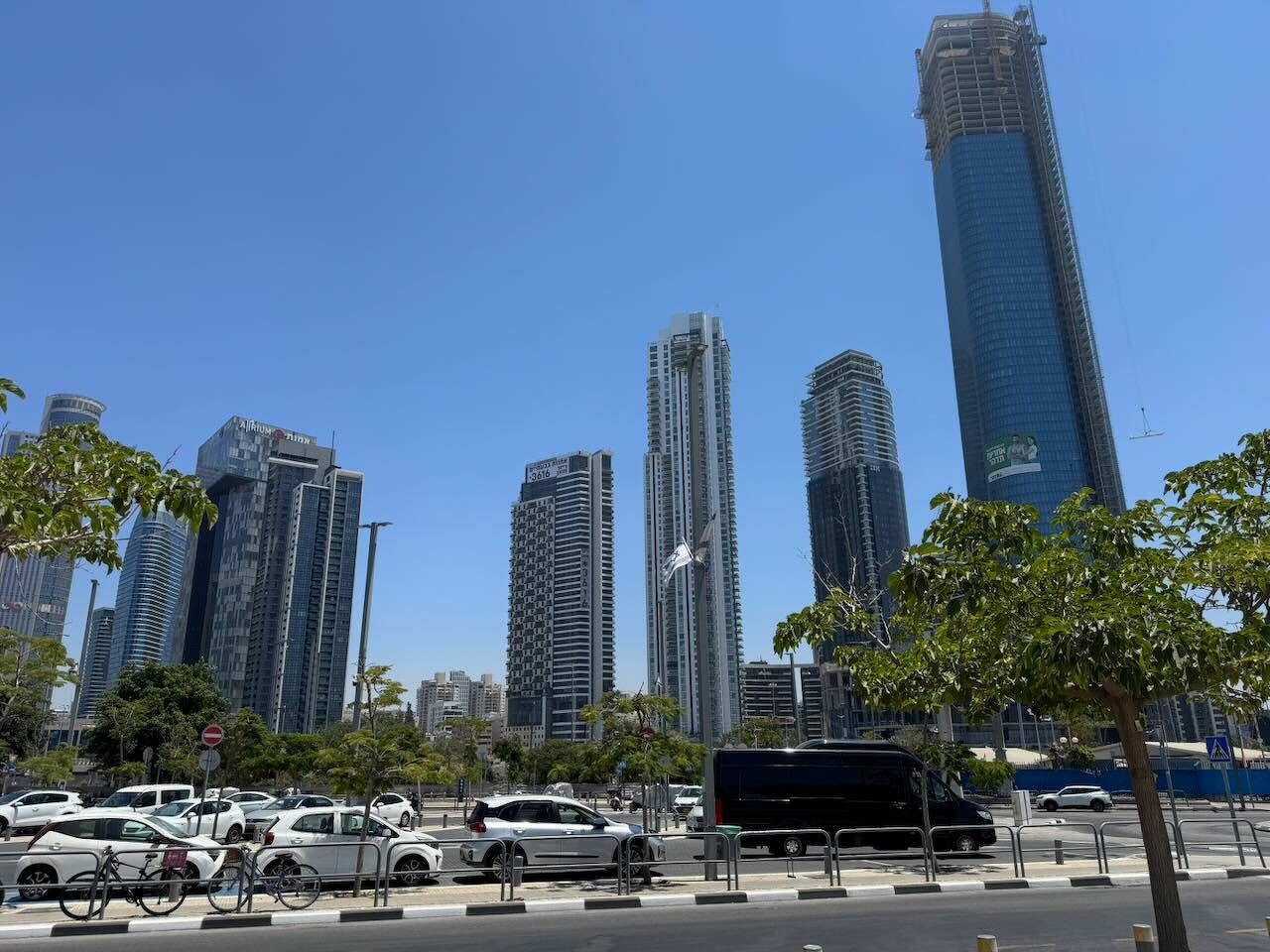
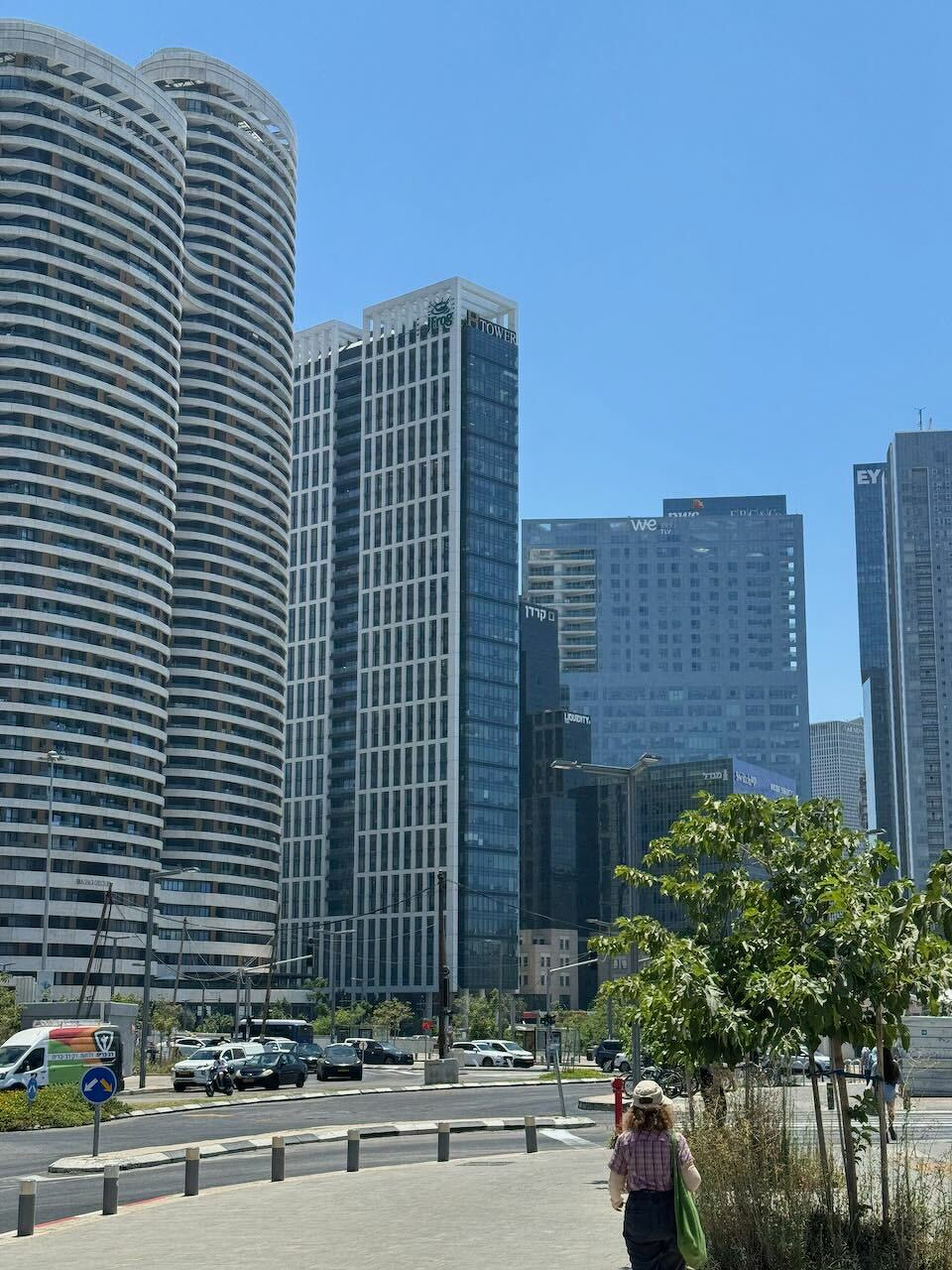
From the media coverage of Israel, some may assume the country is still a developing country, dotted with ramshackle villages and ancient ruins. Yes, there are villages, and there are many interesting archaeological sites, but Israel’s cities are modern metropolises, including its three major urban centers, Jerusalem, Tel Aviv, and Haifa. We live in Tel Aviv, which combines a modern skyline of tall high rises with neighborhood streets lined with stockier four to six story apartment buildings, some of which house cafes, grocery stores, clothing boutiques, electronics outlets, optometrists, and all kinds of other businesses at street level.
Arrival in Israel
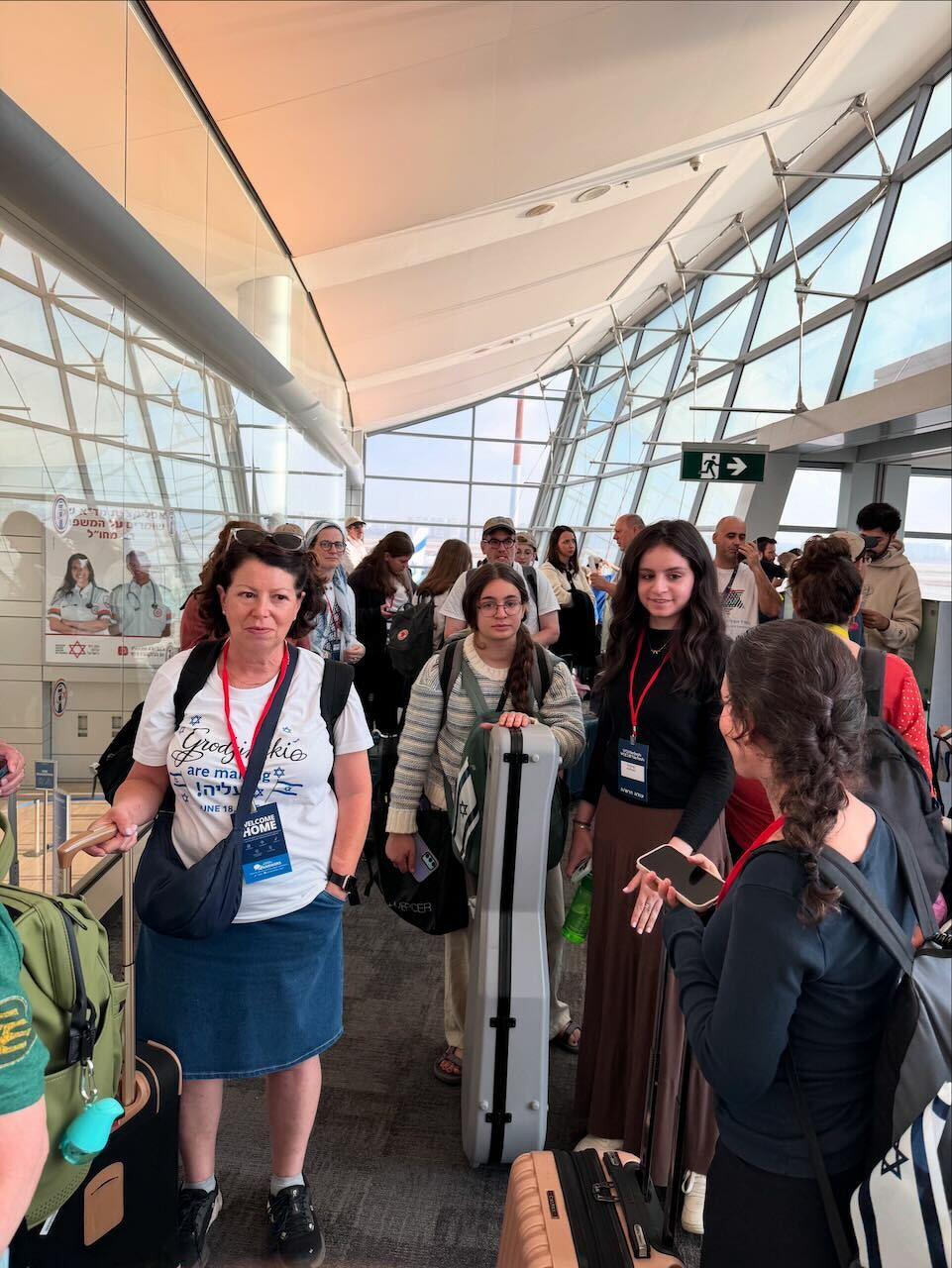
We arrived in Israel on July 8th, 2025. It had taken a year of paperwork to complete our application to immigrate. We arrived on a flight with about 50 other new immigrants and completed most of our processing at Ben Gurion Airport (TLV), just outside Tel Aviv.
We thought that Nancy’s Israeli citizenship was still valid from when she made Aliyah in the 1980s, but the Ministry of Immigration disagreed and decided to classify her not as a returning citizen, but as a new citizen due to her nearly 40 year absence – other than many vacation visits. Fortunately, after navigating the bureaucracy for several months that’s all straightened out, and Nancy and I are now both dual citizens of the United States and Israel.